
Architecture and Planning
GATE AR year:2022 PYQs
Build your understanding with focused practice from past exam papers.
Questions 31–40 of 81. Imported answers require independent review unless marked reviewed.
Question 31
Open questionARMCQ2 marksNeeds review
Match the States in Group I with the corresponding Vernacular Building Typologies in Group II.
Group I: (P) Kerala; (Q) Jharkhand; (R) Nagaland; (S) Gujarat.
Group II: (1) Morung; (2) Pol; (3) Dhumaria; (4) Nalukettu; (5) Ghotul.
Your answerChoose one option.
Log in to check the answer
You can attempt this question now. Sign in to view the answer key, explanations and discussion.Log in to check answerQuestion 32
Open questionARMCQ2 marksNeeds review
Match the examples in Group I with their corresponding typologies in Group II.
Group I: (P) Navi Mumbai; (Q) Hissar; (R) Greater Mumbai; (S) Delhi-Mumbai Industrial Corridor.
Group II: (1) Counter Magnet; (2) Urban Agglomeration; (3) Satellite Town; (4) University Town; (5) Investment Region.
Your answerChoose one option.
Log in to check the answer
You can attempt this question now. Sign in to view the answer key, explanations and discussion.Log in to check answerQuestion 33
Open questionARMCQ2 marksNeeds review
Match the Place(s)/Event(s) in Group I with the corresponding Heritage Significance/Characteristics in Group II.
Group I: (P) Chhatrapati Shivaji Terminus, Mumbai; (Q) Kumbh Mela; (R) Walled City of Jaipur; (S) Rock Shelters of Bhimbetka.
Group II: (1) A long interaction between people and the landscape; (2) Cultural routes; (3) Victorian Gothic revival and traditional Indian features; (4) Intangible cultural heritage; (5) Traditional human settlement, land use reflecting an interchange of ancient Hindu and Mughal ideas.
Your answerChoose one option.
Log in to check the answer
You can attempt this question now. Sign in to view the answer key, explanations and discussion.Log in to check answerQuestion 34
Open questionARMCQ2 marksNeeds review
Match the Urban Design Concepts in Group I with their corresponding Proponents in Group II.
Group I: (P) Vertical theory of Urban Design; (Q) Theory of Response Environments; (R) Serial Vision; (S) Winter Urbanism.
Group II: (1) Ian Bentley; (2) Gordon Cullen; (3) Norman Pressman; (4) Ken Yeang; (5) Paul Oliver.
Your answerChoose one option.
Log in to check the answer
You can attempt this question now. Sign in to view the answer key, explanations and discussion.Log in to check answerQuestion 35
Open questionARMCQ2 marksNeeds review
In the following sketch, P, Q, R, and S refer to elements of an urban space. Identify P, Q, R, S.
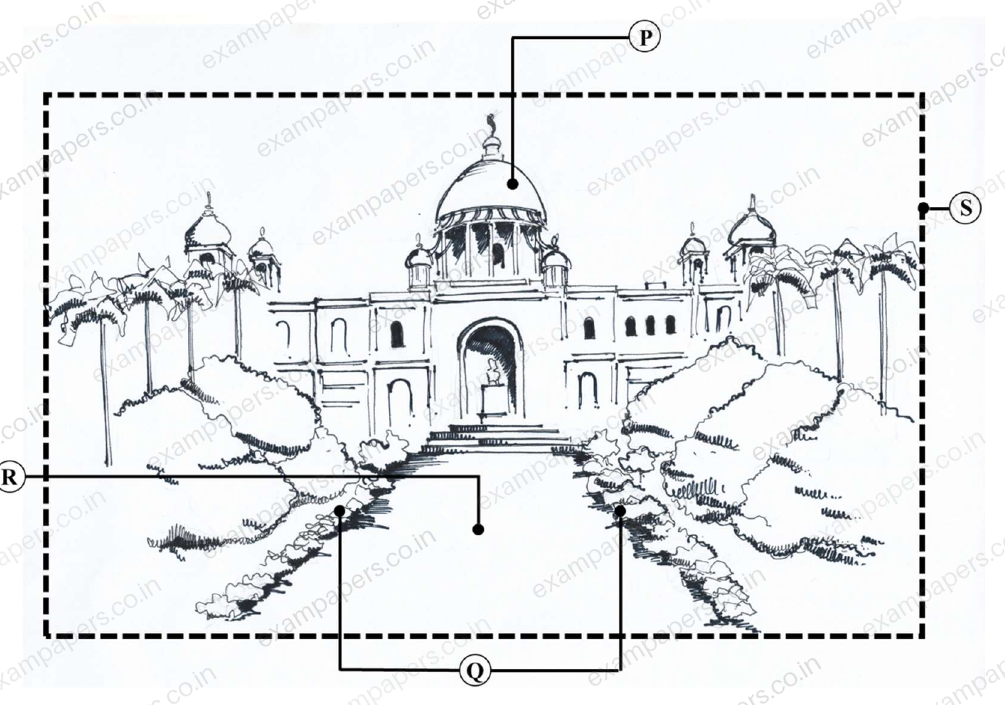
Your answerChoose one option.
Log in to check the answer
You can attempt this question now. Sign in to view the answer key, explanations and discussion.Log in to check answerQuestion 36
Open questionARMCQ2 marksNeeds review
As per the URDPFI Guidelines 2015, match the type of Health Care Facilities in Group I to the corresponding population served per unit in Group II.
Group I: (P) Multi-Speciality Hospital; (Q) Dispensary; (R) Veterinary Hospital; (S) General Hospital.
Group II: (1) 15,000; (2) 50,000; (3) 1,00,000; (4) 2,50,000; (5) 5,00,000.
Your answerChoose one option.
Log in to check the answer
You can attempt this question now. Sign in to view the answer key, explanations and discussion.Log in to check answerQuestion 37
Open questionARMCQ2 marksNeeds review
Match the plan forms in Group I with their corresponding project names in Group II.
Group I: (P)
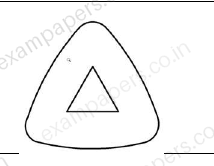
; (Q)
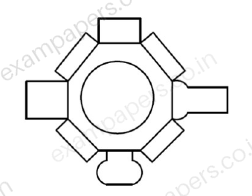
; (R)
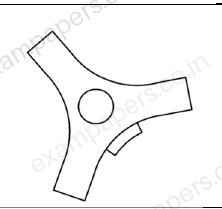
; (S)

.
Group II: (1) New Parliament of Egypt, Cairo; (2) Apple Park Campus, California; (3) Commerzbank, Frankfurt; (4) 30 St. Mary Axe, London; (5) Parliament Building, Dhaka.
Your answerChoose one option.
Log in to check the answer
You can attempt this question now. Sign in to view the answer key, explanations and discussion.Log in to check answerQuestion 38
Open questionARMCQ2 marksNeeds review
Match the Biosphere reserves in India in Group I with their corresponding locations in Group II.
Group I: (P) Agasthyamalai Biosphere Reserve; (Q) Nokrek Biosphere Reserve; (R) Cold desert Biosphere Reserve; (S) Simlipal Biosphere Reserve.
Group II: (1) Western Himalayan region, Himachal Pradesh; (2) Western Ghats, Kerala and Tamil Nadu; (3) Tura range, Meghalaya; (4) Kachchh, Rajkot, Surendranagar, and Patan districts, Gujarat; (5) Mayurbhanj district, Odisha.
Your answerChoose one option.
Log in to check the answer
You can attempt this question now. Sign in to view the answer key, explanations and discussion.Log in to check answerQuestion 39
Open questionARMSQ2 marksNeeds review
In traditional Persian context, qanat system refers to
Your answerSelect all correct options. You can choose more than one.
Log in to check the answer
You can attempt this question now. Sign in to view the answer key, explanations and discussion.Log in to check answerQuestion 40
Open questionARMSQ2 marksNeeds review
Which of the following is/are classified as the Principles of Universal Design?
Your answerSelect all correct options. You can choose more than one.
Log in to check the answer
You can attempt this question now. Sign in to view the answer key, explanations and discussion.Log in to check answer