
Chemistry
GATE CY topic:pericyclic-reactions-photochemistry PYQs
Build your understanding with focused practice from past exam papers.
How to practice topic:pericyclic-reactions-photochemistry
Attempt a question, record the concept and assumptions, then check the available answer. Rework mistakes after revising the relevant concepts. Topic tags can overlap; review the question context.
Questions 1–10 of 16. Imported answers require independent review unless marked reviewed.
Question 38
Open questionCYMCQ2 marksNeeds review
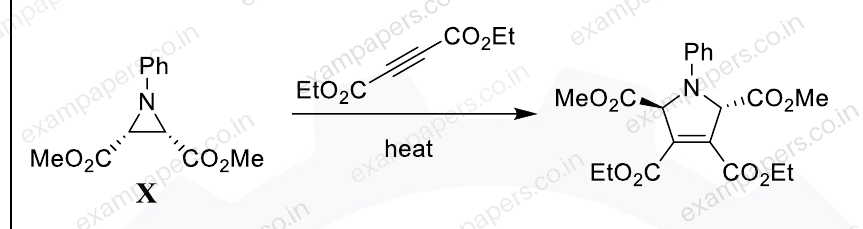
The correct statement about the intermediate formed in the following reaction is
Your answerChoose one option.
Log in to check the answer
You can attempt this question now. Sign in to view the answer key, explanations and discussion.Log in to check answerQuestion 49
Open questionCYMSQ2 marksNeeds review
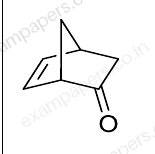
The reaction(s) that produce(s) the following compound is(are)
Your answerSelect all correct options. You can choose more than one.
Log in to check the answer
You can attempt this question now. Sign in to view the answer key, explanations and discussion.Log in to check answerQuestion 58
Open questionCYNAT2 marksNeeds review
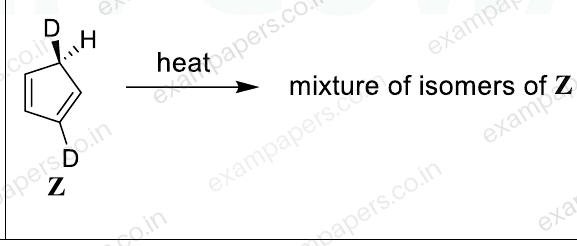
On heating, the compound Z undergoes a series of 1,5-H/D shifts to give a mixture of its isomers. The total number of isomers present in the mixture (including Z) is ______ (in integer).
Log in to check the answer
You can attempt this question now. Sign in to view the answer key, explanations and discussion.Log in to check answerQuestion 27
Open questionCYMSQ1 markNeeds review
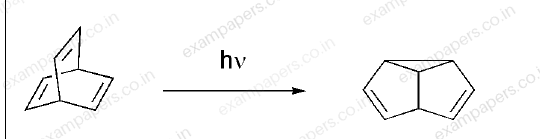
Choose the correct option(s) with regard to mechanism of the following transformation.
Your answerSelect all correct options. You can choose more than one.
Log in to check the answer
You can attempt this question now. Sign in to view the answer key, explanations and discussion.Log in to check answerQuestion 15
Open questionCYMCQ1 markNeeds review
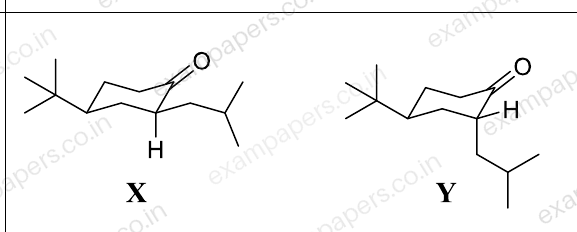
On irradiation using UV light (>300 nm), compounds X and Y, predominately, undergo
Your answerChoose one option.
Log in to check the answer
You can attempt this question now. Sign in to view the answer key, explanations and discussion.Log in to check answerQuestion 38
Open questionCYMCQ2 marksNeeds review
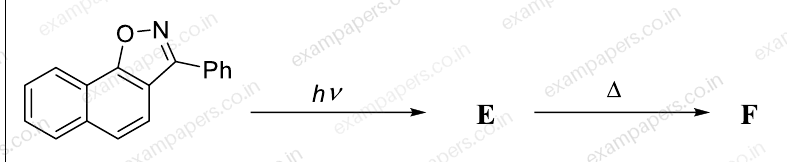
E and F in the given reaction scheme are
Your answerChoose one option.
Log in to check the answer
You can attempt this question now. Sign in to view the answer key, explanations and discussion.Log in to check answerQuestion 15
Open questionCYMCQ1 markNeeds review
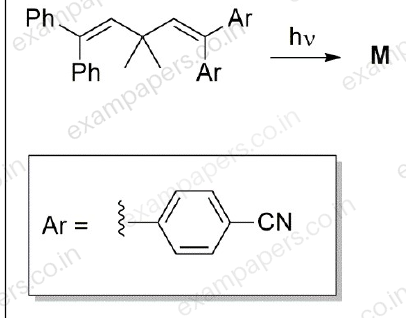
The major product M in the following reaction is
Your answerChoose one option.
Log in to check the answer
You can attempt this question now. Sign in to view the answer key, explanations and discussion.Log in to check answerQuestion 5
Open questionCYMCQ1 markNeeds review
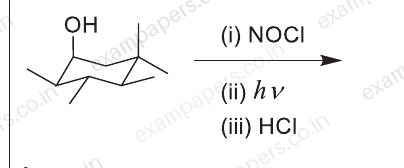
The major product formed in the following reaction [a substituted alcohol-containing bicyclic substrate treated with (i) NOCl, (ii) hν, (iii) HCl] is:
Your answerChoose one option.
Log in to check the answer
You can attempt this question now. Sign in to view the answer key, explanations and discussion.Log in to check answerQuestion 32
Open questionCYMCQ2 marksNeeds review
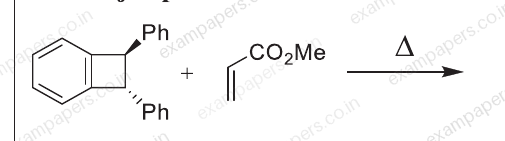
The major product formed in the following reaction [starting material: 1,2-diphenylbenzocyclobutene; methyl acrylate, CO₂Me, heat] is:
Your answerChoose one option.
Log in to check the answer
You can attempt this question now. Sign in to view the answer key, explanations and discussion.Log in to check answerQuestion 10
Open questionCYMCQ1 markNeeds review
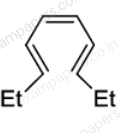
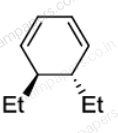
The Woodward-Hoffmann condition to bring out the following transformation is
Your answerChoose one option.
Log in to check the answer
You can attempt this question now. Sign in to view the answer key, explanations and discussion.Log in to check answer