
Mechanical Engineering
GATE ME topic:spatial-aptitude PYQs
Build your understanding with focused practice from past exam papers.
Questions 11–15 of 15. Imported answers require independent review unless marked reviewed.
Question 7
Open questionGAMCQ2 marksNeeds review
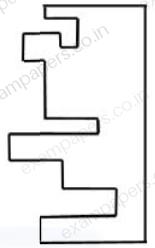
A jigsaw puzzle has 2 pieces. One of the pieces is shown above. Which one of the given options for the missing piece when assembled will form a rectangle? The piece can be moved, rotated or flipped to assemble with the above piece.
Your answerChoose one option.
Log in to check the answer
You can attempt this question now. Sign in to view the answer key, explanations and discussion.Log in to check answerQuestion 9
Open questionGAMCQ2 marksNeeds review
Consider a square sheet of side 1 unit. The sheet is first folded along the main diagonal. This is followed by a fold along its line of symmetry. The resulting folded shape is again folded along its line of symmetry. The area of each face of the final folded shape, in square units, equal to
Your answerChoose one option.
Log in to check the answer
You can attempt this question now. Sign in to view the answer key, explanations and discussion.Log in to check answerQuestion 18
Open questionMEMCQ1 markNeeds review
The transformation matrix for mirroring a point in
plane about the line
is given byYour answerChoose one option.
Log in to check the answer
You can attempt this question now. Sign in to view the answer key, explanations and discussion.Log in to check answerQuestion 9
Open questionGAMCQ2 marksNeeds review
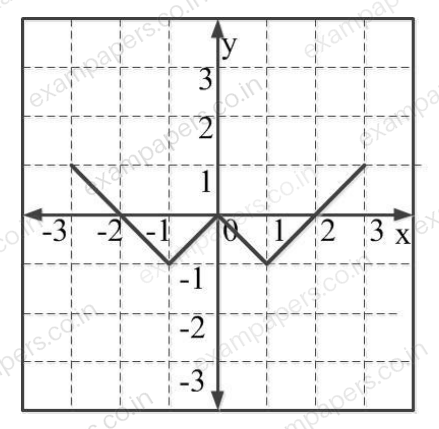
Which of the following functions describe the graph shown in the below figure?
Your answerChoose one option.
Log in to check the answer
You can attempt this question now. Sign in to view the answer key, explanations and discussion.Log in to check answerQuestion 58
Open questionGAMCQ1 markNeeds review
A right-angled cone (with base radius 5 cm and height 12 cm), as shown in the figure below
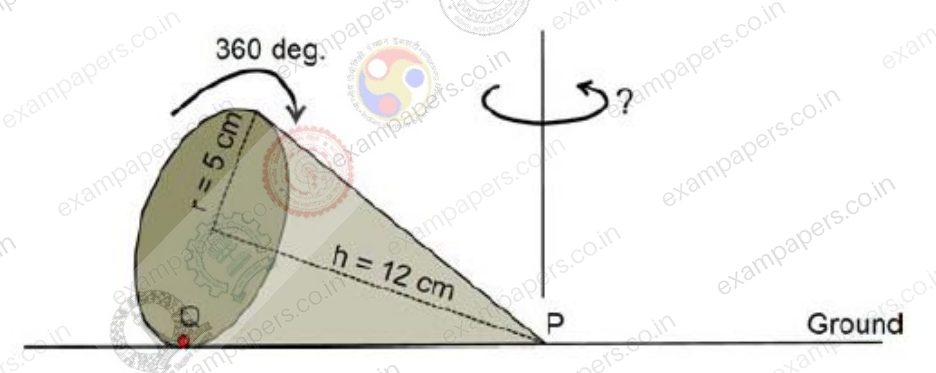
, is rolled on the ground keeping the point P fixed until the point Q (at the base of the cone, as shown) touches the ground again.
By what angle (in radians) about P does the cone travel?
Your answerChoose one option.
Log in to check the answer
You can attempt this question now. Sign in to view the answer key, explanations and discussion.Log in to check answer