
Metallurgical Engineering
GATE MT topic:dislocation-theory PYQs
Build your understanding with focused practice from past exam papers.
How to practice topic:dislocation-theory
Attempt a question, record the concept and assumptions, then check the available answer. Rework mistakes after revising the relevant concepts. Topic tags can overlap; review the question context.
Questions 1–10 of 18. Imported answers require independent review unless marked reviewed.
Question 16
Open questionMTMCQ1 markNeeds review
Which one of the following options is correct? In a face-centered cubic metal, Shockley partial is:
Your answerChoose one option.
Log in to check the answer
You can attempt this question now. Sign in to view the answer key, explanations and discussion.Log in to check answerQuestion 18
Open questionMTMCQ1 markNeeds review
Which one of the following dislocation dissociation reactions is feasible in face-centered cubic metals?
Your answerChoose one option.
Log in to check the answer
You can attempt this question now. Sign in to view the answer key, explanations and discussion.Log in to check answerQuestion 52
Open questionMTNAT2 marksNeeds review
The lattice parameter of Ni (face-centered cubic) is 0.35 nm and its shear modulus is 76 GPa. The strain energy per unit length of a screw dislocation in Ni crystal (rounded off to two decimal places) is ________ × 10⁻⁹ J/m.
Log in to check the answer
You can attempt this question now. Sign in to view the answer key, explanations and discussion.Log in to check answerQuestion 26
Open questionMTMSQ1 markNeeds review
With reference to edge and screw dislocations, which of the following statements is/are CORRECT?
Your answerSelect all correct options. You can choose more than one.
Log in to check the answer
You can attempt this question now. Sign in to view the answer key, explanations and discussion.Log in to check answerQuestion 61
Open questionMTNAT2 marksNeeds review
A single crystal BCC metal with a lattice parameter
is subjected to deformation at a shear strain rate of
.If the average mobile dislocation density in the single crystal is
, the average dislocation velocity is _____
(rounded off to two decimal places).Given: Burgers vector
Log in to check the answer
You can attempt this question now. Sign in to view the answer key, explanations and discussion.Log in to check answerQuestion 24
Open questionMTMCQ1 markNeeds review
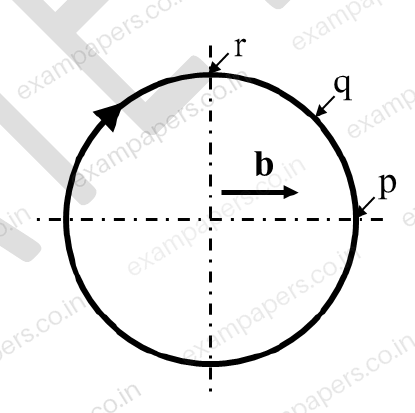
The figure shows a dislocation loop (shown by the solid circle), whose Burgers vector is
(shown by the horizontal arrow inside the dislocation loop). Identify the nature of the dislocation segment at locations p, q and r.The dash-dot lines show the horizontal and vertical diameters of the loop, and the arrow along the dislocation loop indicates the line vector.
Your answerChoose one option.
Log in to check the answer
You can attempt this question now. Sign in to view the answer key, explanations and discussion.Log in to check answerQuestion 25
Open questionMTMCQ1 markNeeds review
Match the concepts listed in Column I with the phenomena listed in Column II.
Column I | Column II
P. Peierls-Nabarro stress | 1. Yield point phenomenon
Q. Cottrell’s atmosphere | 2. Fatigue
R. Paris law | 3. Dislocation glide
S. Considère’s criterion | 4. Onset of necking
Your answerChoose one option.
Log in to check the answer
You can attempt this question now. Sign in to view the answer key, explanations and discussion.Log in to check answerQuestion 21
Open questionMTMCQ1 markNeeds review
Magnitude of Burgers vector of the dislocation resulting from reaction of dislocations with Burgers vectors
and
isYour answerChoose one option.
Log in to check the answer
You can attempt this question now. Sign in to view the answer key, explanations and discussion.Log in to check answerQuestion 51
Open questionMTMSQ2 marksNeeds review
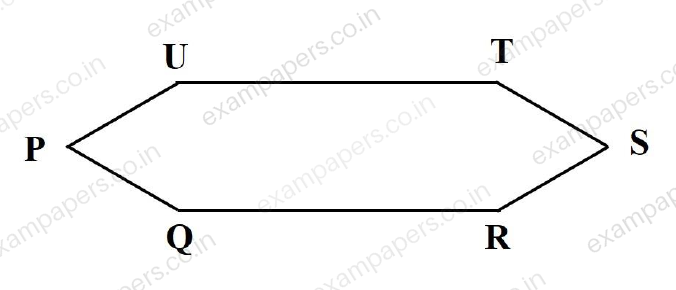
A dislocation loop PQRSTU is on the
plane of a cubic single crystal with Burgers vector
. The dislocation segments
and
are parallel to
and
directions, respectively.
The correct statement(s) is/are
Your answerSelect all correct options. You can choose more than one.
Log in to check the answer
You can attempt this question now. Sign in to view the answer key, explanations and discussion.Log in to check answerQuestion 33
Open questionMTMSQ1 markNeeds review
Given the strain rate (
), dislocation density (
), dislocation velocity (
), which of the following relation(s) is(are) correct? Assume that Orowan equation for plastic flow due to the dislocation movement is obeyed.Your answerSelect all correct options. You can choose more than one.
Log in to check the answer
You can attempt this question now. Sign in to view the answer key, explanations and discussion.Log in to check answer