
Life Sciences
GATE XL Structure-Reactivity Correlations and Organic Reaction Mechanisms PYQs
Build your understanding with focused practice from past exam papers.
How to practice Structure-Reactivity Correlations and Organic Reaction Mechanisms
Attempt a question, record the concept and assumptions, then check the available answer. Rework mistakes after revising the relevant concepts. Topic tags can overlap; review the question context.
Questions 1–10 of 43. Imported answers require independent review unless marked reviewed.
Question 13
Open questionXL-PMCQ1 markNeeds review
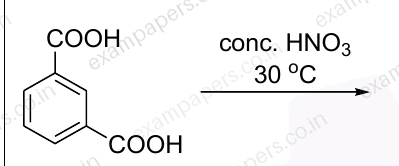
The major product formed in the following reaction is
Your answerChoose one option.
Log in to check the answer
You can attempt this question now. Sign in to view the answer key, explanations and discussion.Log in to check answerQuestion 17
Open questionXL-PNAT1 markNeeds review
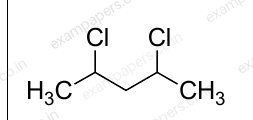
The total number of distinct stereoisomers for the following compound is ________ (in integer).
Log in to check the answer
You can attempt this question now. Sign in to view the answer key, explanations and discussion.Log in to check answerQuestion 21
Open questionXL-PMCQ2 marksNeeds review
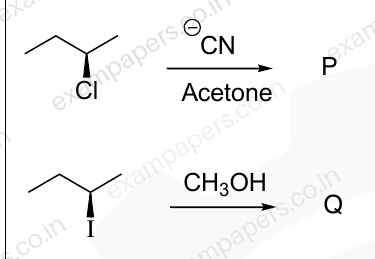
The major products P and Q obtained in the following reactions are
Your answerChoose one option.
Log in to check the answer
You can attempt this question now. Sign in to view the answer key, explanations and discussion.Log in to check answerQuestion 22
Open questionXL-PMCQ2 marksNeeds review
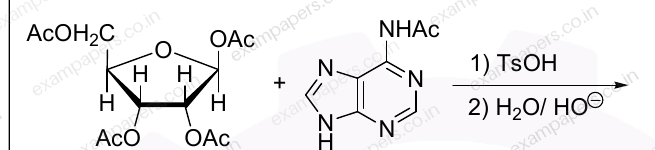
The major product formed in the following two-step transformation is
(Note: Ts = tosyl and Ac = acetyl)
Your answerChoose one option.
Log in to check the answer
You can attempt this question now. Sign in to view the answer key, explanations and discussion.Log in to check answerQuestion 11
Open questionXL-PMCQ1 markNeeds review
The rate of solvolysis for the following tertiary halides in 80% aqueous ethanol at 25 °C follows the order
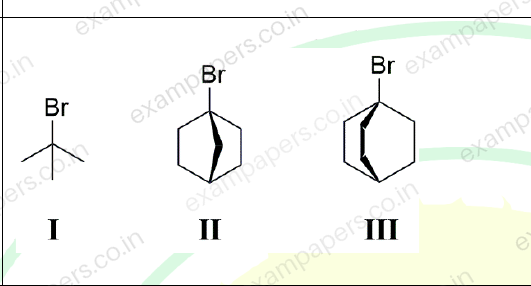
Your answerChoose one option.
Log in to check the answer
You can attempt this question now. Sign in to view the answer key, explanations and discussion.Log in to check answerQuestion 17
Open questionXL-PMSQ1 markNeeds review
The CORRECT statement(s) regarding the given molecules is(are)
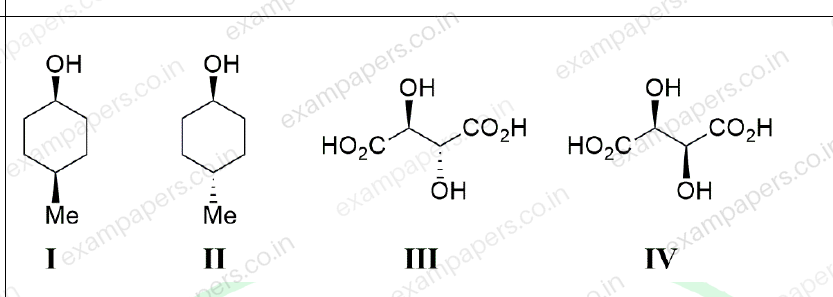
Your answerSelect all correct options. You can choose more than one.
Log in to check the answer
You can attempt this question now. Sign in to view the answer key, explanations and discussion.Log in to check answerQuestion 22
Open questionXL-PMSQ2 marksNeeds review
The CORRECT statement(s) for the given reactions is(are)
Reactions:
I) Me–CH(Me)–CHO + i) MeMgBr; ii) H₃O⁺ →
II) MeCHO + i) ⁱPrMgBr; ii) H₃O⁺ →
III) Me–CH(Me)–CO₂Me + i) MeMgBr (excess); ii) H₃O⁺ →
IV) Me₂CO + i) ⁱPrMgBr; ii) H₃O⁺ →
Possible products:
P: Me–C(OH)(Me)–CH₂Me
Q: Me–C(OH)(Me)–CH(Me)₂
R: Me–CH(Me)–CO₂Me
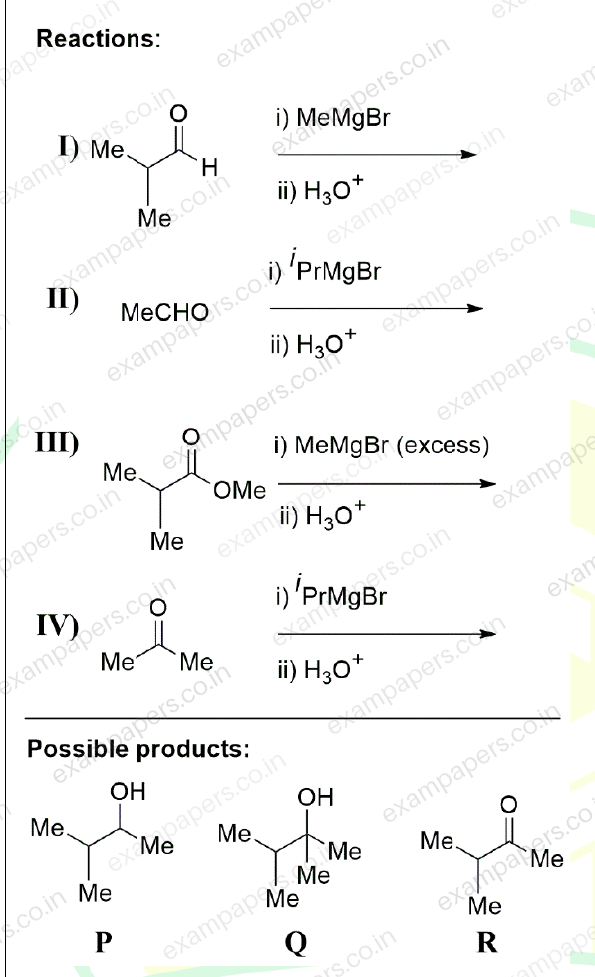
Your answerSelect all correct options. You can choose more than one.
Log in to check the answer
You can attempt this question now. Sign in to view the answer key, explanations and discussion.Log in to check answerQuestion 14
Open questionXL-PMCQ1 markNeeds review
The CORRECT order of acidity of the following compounds is
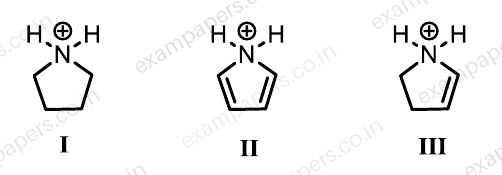
Your answerChoose one option.
Log in to check the answer
You can attempt this question now. Sign in to view the answer key, explanations and discussion.Log in to check answerQuestion 15
Open questionXL-PMCQ1 markNeeds review
The molecules A and B are a pair of ____________.
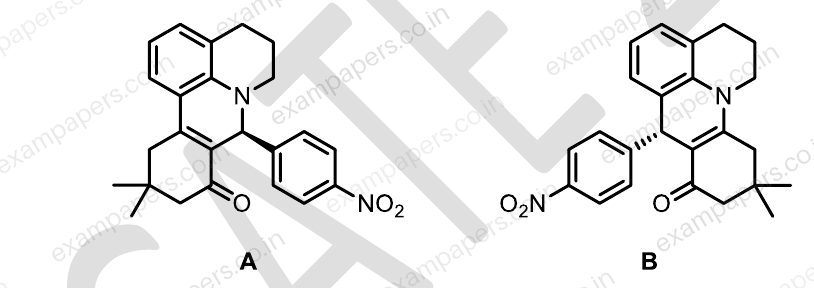
Your answerChoose one option.
Log in to check the answer
You can attempt this question now. Sign in to view the answer key, explanations and discussion.Log in to check answerQuestion 16
Open questionXL-PMSQ1 markNeeds review
The CORRECT option(s) of Y for the following reaction is/are
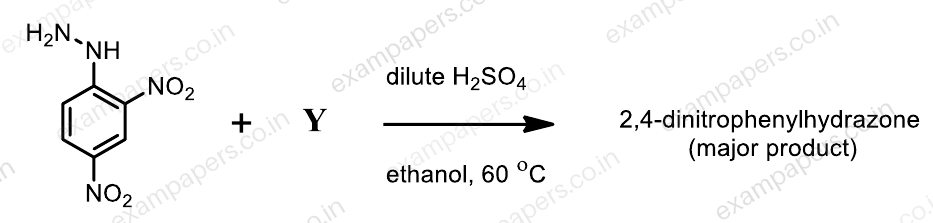
Your answerSelect all correct options. You can choose more than one.
Log in to check the answer
You can attempt this question now. Sign in to view the answer key, explanations and discussion.Log in to check answer